

The #Heart4PCOS campaign was started by Ashley Levinson, also known as @pcosgurl. As a PCOS patient and advocate for over 20 years, Ashley’s mission has been to advance awareness of PCOS, chronic illness, and women’s health. This February, let’s join the movement to increase awareness and go red for PCOS!
Table of Contents

Cardiovascular Risks for Women with PCOS
Polycystic Ovarian Syndrome (PCOS) significantly increases a woman’s risk for various cardiovascular issues. Here are some critical statistics:
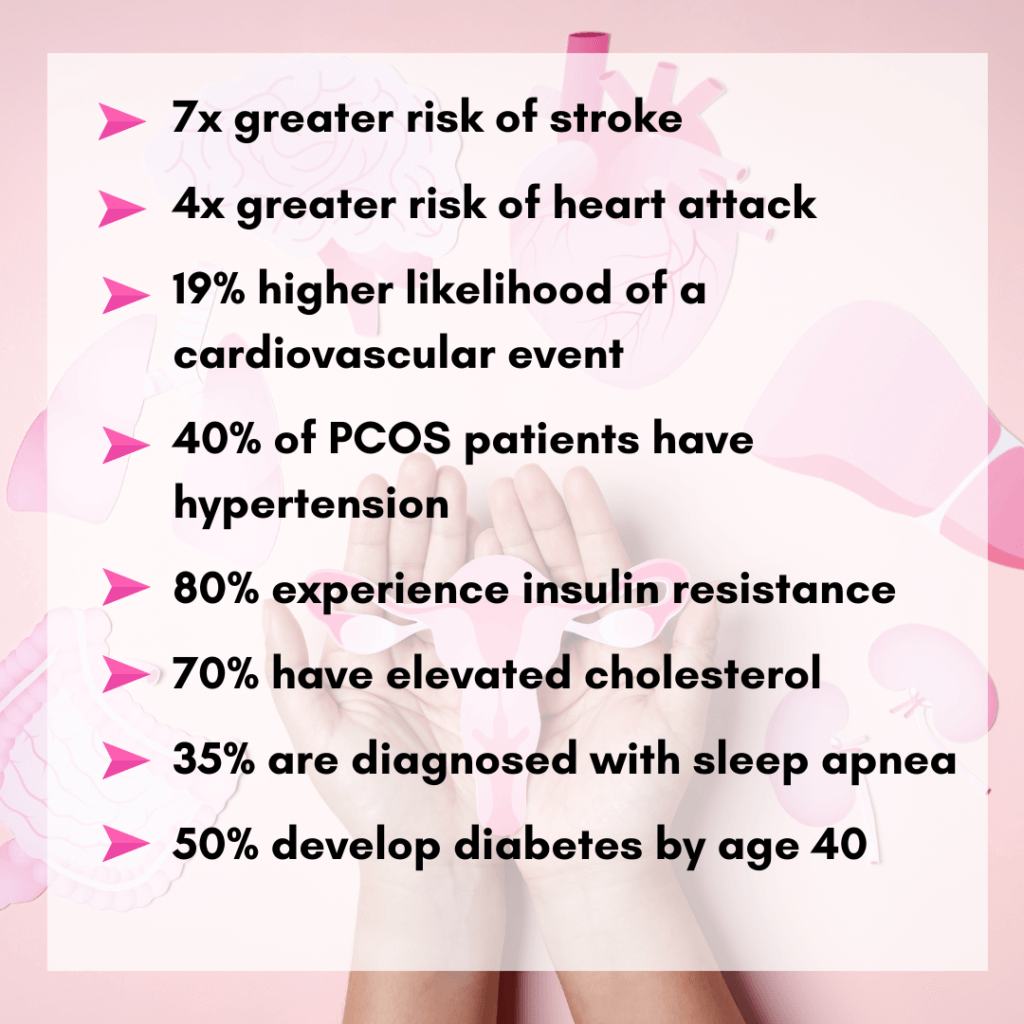
These alarming numbers highlight the importance of early detection and proactive management of cardiovascular risks associated with PCOS.
How Does PCOS Affect Heart Health?

PCOS is defined as a hormone imbalance in women, characterized by an overproduction of testosterone. This excess testosterone raises LDL (low-density lipoprotein) or “bad cholesterol” levels, which can accumulate on the vascular lining. Additionally, 80% of women with PCOS have insulin resistance, which causes excess glucose to adhere to these cholesterol deposits, increasing vascular resistance and raising blood pressure. These factors create a heightened risk for heart attacks and strokes.
To compound the issue, many PCOS patients experience increased heart rates and anxiety, which further contribute to hypertension. In fact, 40% of women with PCOS have high blood pressure.
The Role of Birth Control in PCOS Management

Many women with PCOS are prescribed estradiol-based birth control pills, as estrogen opposes testosterone receptor binding. However, estrogen can increase blood pressure and is contraindicated in patients with uncontrolled hypertension. It’s essential to monitor blood pressure regularly, especially when taking estrogen-based treatments.
Progesterone-only options are available, but they are typically less effective at blocking testosterone. For women with PCOS and hypertension, spironolactone—an androgen blocker, diuretic, and blood pressure medication—can be a beneficial alternative. It also helps treat acne and hirsutism.
Sleep Apnea and PCOS

Sleep apnea is another common issue for women with PCOS, affecting 35% of patients, even when adjusted for weight. Symptoms of sleep apnea include snoring, gasping during sleep, dry mouth, fatigue, and morning headaches. Sleep apnea is linked to hypertension and other cardiovascular risks. Home sleep studies are now available and can be delivered directly to your home for convenience.
Taking Control of Your Health
By managing PCOS and its associated hormone imbalances, women can significantly reduce their risks of high blood pressure, cholesterol issues, and cardiovascular events. Regular monitoring and appropriate treatments are crucial steps in safeguarding heart health.
Telehealth Solutions for PCOS Patients
PCOS Sisters Telehealth providers offer comprehensive care for PCOS patients, including:
- Monitoring Hypertension: Patients with a prior in-person diagnosis can log their blood pressure at home.
- Home Sleep Apnea Studies: Kits are delivered to your home, with results available in just a week.
- Lab Work: We provide testing to diagnose and monitor cholesterol and other PCOS-related issues.
- PCOS-Focused Fitness and Nutrition: Access to our exclusive fitness app and tailored programs for PCOS weight management.
For more information, visit www.pcossisters.com to schedule your appointment today. At PCOS Sisters, we treat the whole body and proudly serve as a medical home for women with PCOS.
Cardiovascular Health & PCOS FAQs
What is the #Heart4PCOS campaign?
The #Heart4PCOS campaign is an awareness initiative started by Ashley Levinson to highlight the cardiovascular risks associated with PCOS.
Why are women with PCOS at higher risk for cardiovascular diseases?
Hormonal imbalances in PCOS increase LDL cholesterol, insulin resistance, and blood pressure, leading to a higher risk of heart attacks and strokes.
How does birth control affect women with PCOS?
Estrogen-based birth control can help manage testosterone levels but may increase blood pressure, making regular monitoring essential.
Can women with PCOS and a healthy weight have sleep apnea?
Yes, 35% of women with PCOS experience sleep apnea, regardless of weight.
What services does PCOS Sisters Telehealth offer?
They offer hypertension monitoring, home sleep studies, lab work, and PCOS-focused fitness and nutrition programs.

